PalmPay vs OPay: Which Nigerian Mobile Wallet Should You Use?

OPay vs PalmPay: compare fees, transfer costs, savings rates, rewards and safety to see which Nigerian mobile wallet fits you best in 2026.
If you’re trying to decide between OPay and PalmPay, we are here to help.
These two apps now sit on more Nigerian phones than almost any other financial product, and most users end up asking the same question: which one actually saves you more money?
The honest answer is that OPay vs PalmPay isn’t a knockout fight.
Both are licensed as Mobile Money Operators by the Central Bank of Nigeria, both have deposits insured by the NDIC, and both cover the basics, transfers, bill payments, airtime, and savings, equally well.
Where they differ is in fees, rewards, interface, and the extra features built around the core wallet.
This guide breaks all of that down so you can pick the one that actually fits how you use money day to day.
Quick Verdict
| Category | Winner | Why |
| Lowest everyday fees | Tie, slight edge to PalmPay | Comparable bank transfer charges; PalmPay’s POS rates run a touch lower |
| Cashback and rewards | PalmPay | PalmPoints on airtime, bills, and referrals; frequent promos |
| Clean, distraction-free interface | OPay | Minimal design with fewer pop-ups and in-app promos |
| Extra services (rides, food, POS agents) | OPay | Broader ecosystem beyond pure banking |
| Savings products | Tie | Both offer flexible daily-interest savings plus locked/fixed plans |
| Best for beginners | OPay | Simpler layout, fewer distractions while learning the basics |
| Best for reward-chasers | PalmPay | Built around points, cashback, and gamified promos |
What Is OPay?
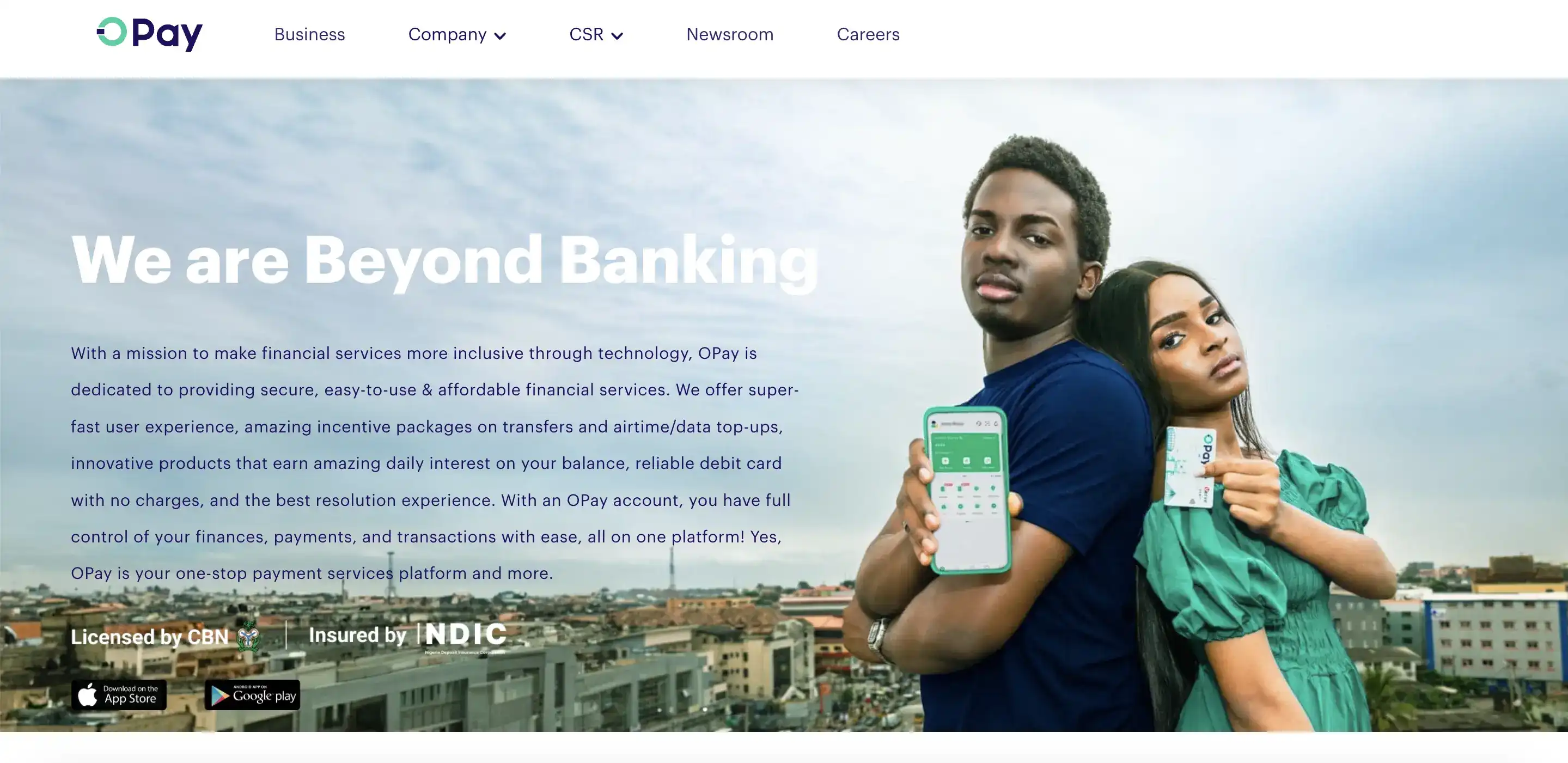
++OPay++ is a financial technology company and mobile-based digital wallet.
With OPay users can use their debit cards, send and receive money, pay bills, and purchase phone credit.
The company launched in Nigeria in 2018 and has grown into one of the country’s most widely used fintech platforms.
Beyond the wallet, it also runs a large agent network, USSD banking (*955#) for users without reliable internet, and add-on services like ride-hailing and food delivery in some cities.
If most of the money landing in your wallet actually comes from outside Nigeria rather than local transfers, you can receive ++international transfers into an OPay wallet++.
Because each platform’s own pricing can shift with little notice, always check the current fee schedule inside the app before moving larger amounts.
What Is PalmPay?
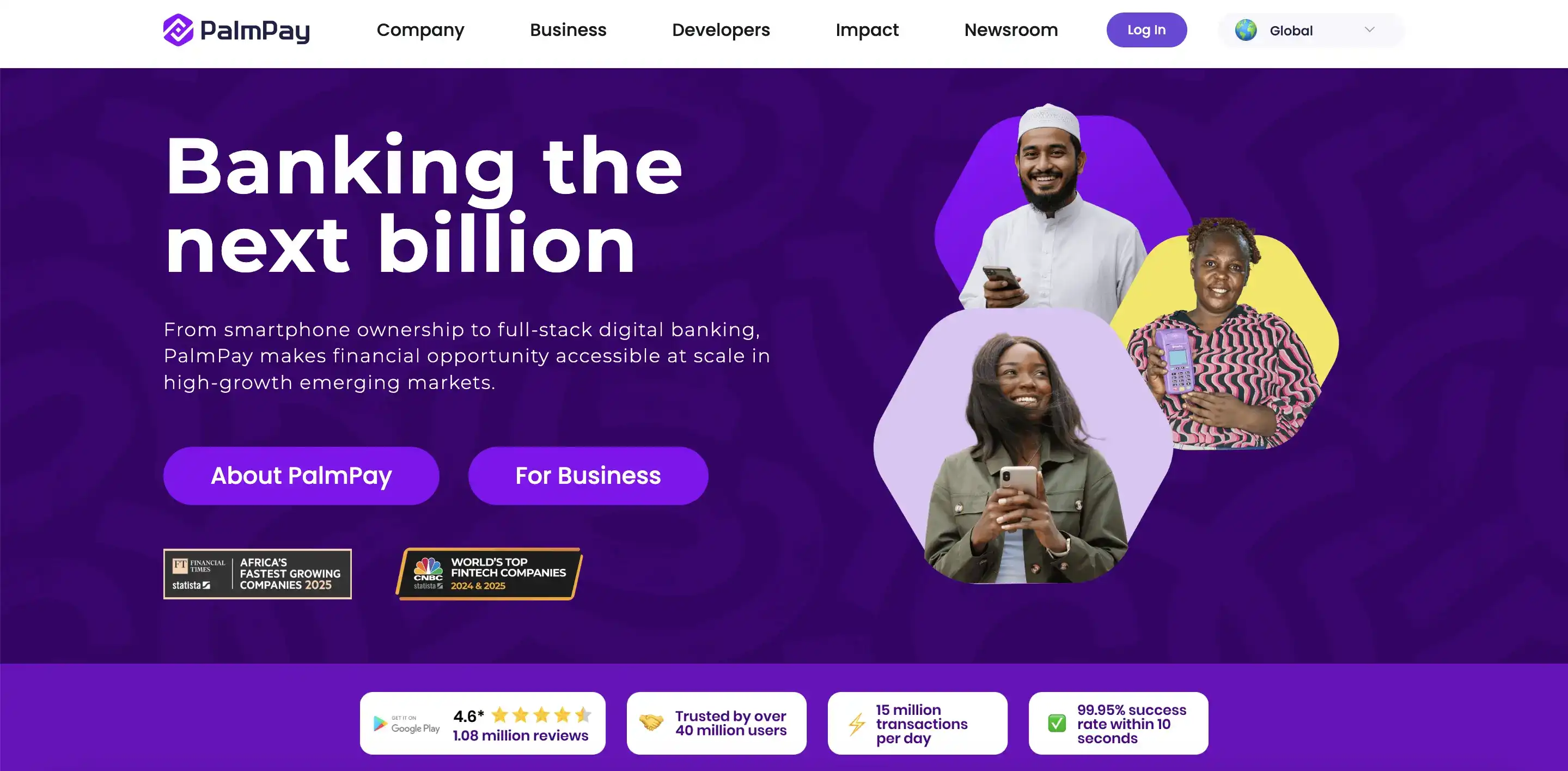
++PalmPay++ is mobile banking platform and digital wallet provider that focuses more tightly on rewards.
Although it runs throughout Africa, it was created in 2019 with a substantial user base in Nigeria.
It provides debit cards, high-interest savings wallets, bill payment, and peer-to-peer money transfers. a
Every transaction, bill payment, airtime top-up, and referral earns points that convert into discounts or perks, and the app frequently runs promos, cashback events, and sign-on bonuses.
OPay vs PalmPay: Fees Compared
Since January 2026, a flat ₦50 stamp duty applies to every electronic transfer of ₦10,000 or more.
This is a federal government charge under the Nigeria Tax Act 2025, not a fee set by either app, and it now applies uniformly across banks and fintechs, deducted from the sender rather than the receiver as it was before.
On top of that federal charge, here’s how the platforms’ own pricing generally compares:
- Wallet-to-wallet transfers: Free on both apps when sending to another OPay or PalmPay account.
- Transfers to bank accounts: Both charge roughly ₦10–₦50 depending on the amount, on top of the new stamp duty for transfers above ₦10,000.
- POS/agent withdrawals: Both sit around 0.5% of the transaction, though PalmPay’s agent rates have sometimes come in a little lower — the gap is small enough that it rarely changes the overall winner.
- Bill payments and airtime: Usually free or minimal on both, with PalmPay layering cashback/points on top.
Rewards and Cashback
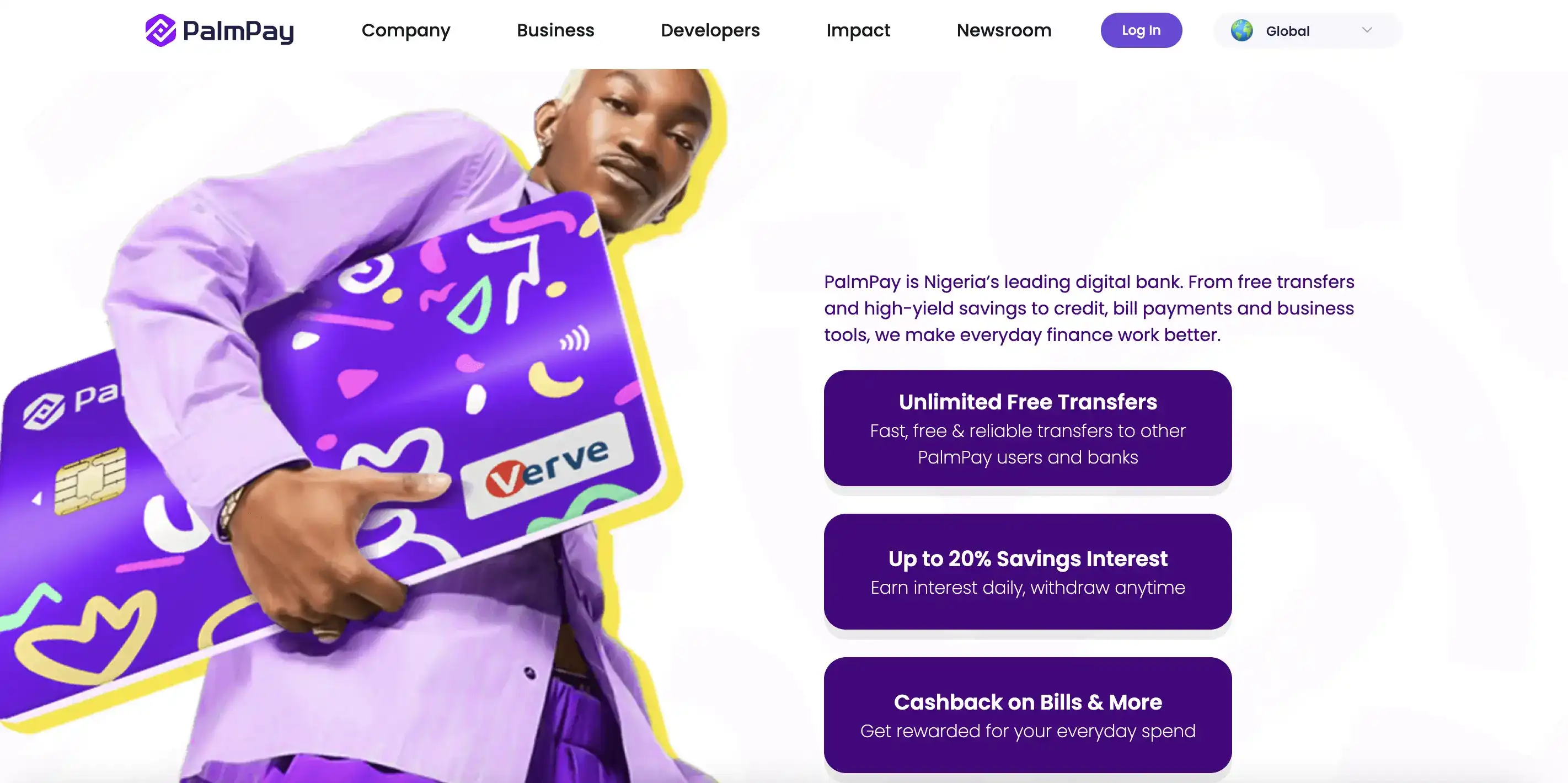
Since you already read the state above, when it comes to reward and cashback, PalmPay wins here.
This means that PalmPay gives you points when you pay bills, buy airtime, or refer a friend.
It also runs promos often, and these can save you real money if you use the app a lot.
Unlike PalmPay, OPay does referrals differently. It just pays you cash for each person you bring in.
That’s simple, but it’s not as fun as collecting points.
If you like cashback and coupon-type savings, PalmPay is the better choice.
Savings Products
Both apps have a savings option that works like a simple account with high interest. You earn interest every day, and you can take your money out anytime with no penalty.
Both also offer fixed savings plans. Sometimes called “target savings”, where you lock your money for a set time, usually 30, 90, or 365 days, in return for a better rate.
Rates change often on both apps, so the bigger difference usually comes down to which app you already use every day, not which one pays a little more.
This kind of daily-interest savings feature isn’t unique to Nigeria either, many ++mobile money wallets across Africa and Asia++ offer something similar.
User Interface and Experience

When it comes to user experience for both of these apps, there’s a slight difference.
OPay’s design is closer to a traditional banking app. Clean, minimal, and focused on the transaction you came to do.
PalmPay is more colourful and promotional, which some users enjoy and others find distracting when they just want to send money quickly.
If you want a no-frills wallet, OPay tends to feel calmer; if you like being nudged toward deals and rewards, PalmPay’s style will feel more rewarding rather than noisy.
Security and Regulation
Neither app has an edge on paper here.
Both are regulated as Mobile Money Operators by the CBN, both carry NDIC-insured deposits, and both use facial recognition, fingerprint checks, and PIN protection, alongside tiered KYC verification tied to your NIN and BVN.
Some users report OPay’s facial verification prompts trigger slightly more often on unusual transactions, which is arguably a plus for fraud prevention, even if it adds a small extra step.
So, OPay or PalmPay: Which Should You Use?
- Choose OPay if you want a clean interface, plan to use USSD banking, need the wider ecosystem (rides, food delivery, extensive agent network), or you’re new to mobile money and want fewer distractions.
- Choose PalmPay if cashback and rewards genuinely change your spending habits, or you pay a lot of bills and airtime and want the points to add up.
- Use both, which is increasingly common in Nigeria. Many users keep OPay for transfers and everyday banking, and PalmPay specifically for bill payments and airtime to collect the rewards. Neither app charges a maintenance fee, so running both costs nothing beyond a bit of extra app-switching.
Frequently Asked Questions
Is OPay or PalmPay safer?
Both are CBN-licensed Mobile Money Operators with NDIC-insured deposits and comparable security features (PIN, biometrics, tiered KYC). Neither has a meaningful safety edge over the other.
Which has lower transfer fees, OPay or PalmPay?
They’re close enough to call a tie for most users — both charge roughly ₦10–₦50 for bank transfers, plus the new ₦50 federal stamp duty on transfers of ₦10,000 or more. PalmPay’s POS/agent rates are sometimes marginally lower.
Can I use OPay and PalmPay at the same time?
Yes. There’s no cost to holding both, and many Nigerians do — using each app for what it does best.
Do OPay and PalmPay charge for savings withdrawals?
Both offer flexible savings that can typically be withdrawn anytime without penalty, alongside fixed savings plans that lock funds for a set term in exchange for a higher rate.
Conclusion
There’s no single “best” wallet here.
OPay and PalmPay solve the same core problem in two different styles.
OPay suits someone who wants a fast, minimal way to move money and access a broader set of services around it.
PalmPay suits someone who wants every transaction to feel like it’s earning something back.
For most Nigerians, the realistic answer isn’t picking one and abandoning the other, it’s running both, and letting each app handle the type of transaction it’s actually best at.
This article is for general information only. Fees, cashback rates, and features change frequently — always confirm current terms directly in the OPay or PalmPay app before making a decision.