The Best 2026 New Year Financial Resolutions

The Best 2026 New Year Financial Resolutions A new year always makes money goals feel possible again. You promise yourself you will save more, spend less, pay off debt, or finally stop wondering where your salary went. But most New Year financial resolutions fail for one simple reason: they are too vague. “Save more money” […]
A new year always makes money goals feel possible again. You promise yourself you will save more, spend less, pay off debt, or finally stop wondering where your salary went.
But most New Year financial resolutions fail for one simple reason: they are too vague.
“Save more money” sounds good, but it does not tell you how much to save, where the money will come from, or what to do when an unexpected bill appears. The same goes for “spend less” or “be better with money.” These are wishes, not clear plans.
That does not mean financial resolutions are useless. They can work very well when they are simple, realistic, and easy to track.
In this guide, we’ll go through practical money goals for 2026 that can help you build better habits, reduce financial stress, and make smarter decisions with the money you already have.
Key Takeaways
- Financial resolutions work better when they are specific, not vague. “Save more” is harder to follow than “save a small amount every payday.”
- A simple budget should come before big financial goals because it shows where your money is going each month.
- Paying off debt, building emergency savings, and reviewing monthly bills can make a bigger difference than trying to change everything at once.
- Cashback, discounts, and credit cards can help only if they do not push you into unnecessary spending or debt.
- One of the best money goals for 2026 is to improve your income, not only cut expenses.
Build a Simple Budget Before Making Big Plans
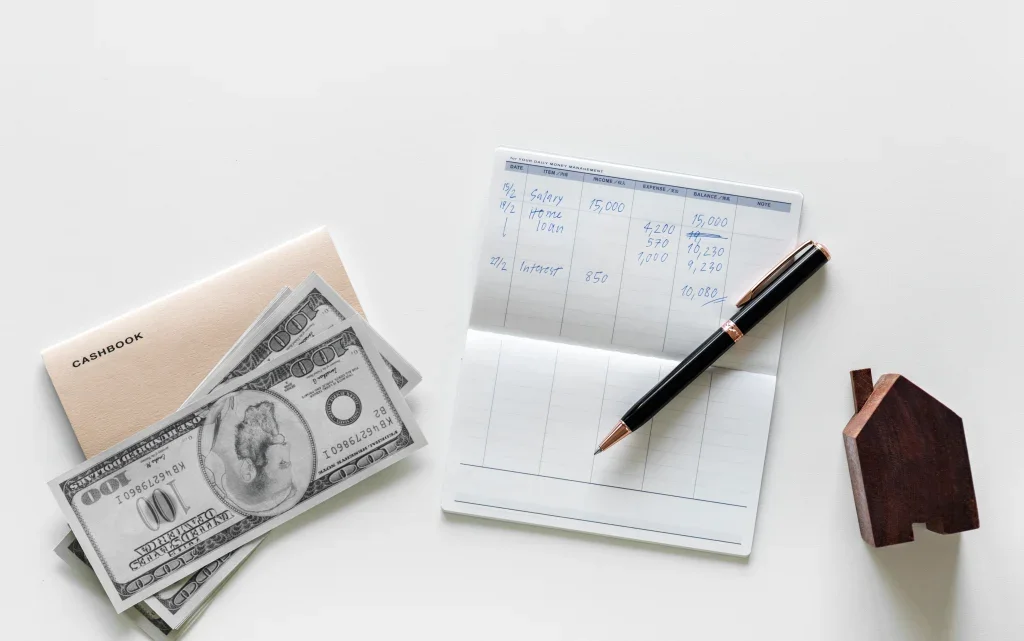
Before you decide to save more, pay off debt, or start investing, you need to know what is happening with your money right now.
You may think most of your money goes to bills, but after checking your spending, you may notice that delivery food, small online orders, transport, subscriptions, or random shop visits are taking more than expected.
Start by writing down your monthly income.
Then write your fixed costs first: rent, utilities, internet, transport, loan payments, school costs, insurance, and anything else you must pay every month.
After that, write down flexible spending.
This includes groceries, takeout, clothes, entertainment, gifts, apps, subscriptions, and small purchases.
A simple version can look like this:
| Category | Monthly Limit |
|---|---|
| Rent and bills | $500 |
| Groceries | $250 |
| Transport | $80 |
| Debt payments | $100 |
| Subscriptions | $20 |
| Savings | $50 |
| Personal spending | $100 |
Start a Small Emergency Fund
An emergency fund is money you keep only for unexpected problems.
This can be a medical bill, car repair, broken phone, delayed salary, urgent travel, or a few days without work.
The mistake many people make is thinking an emergency fund must be huge from the start.
It does not.
If saving three to six months of expenses feels impossible, start with a smaller goal.
Your first target can be $50, $100, or one week of basic expenses.
The amount depends on your income and country, but the idea is the same: build a small buffer so every surprise does not become a crisis.
For example, if you can save $10 every week, that becomes around $40 in one month. It may not sound like much, but after three months, you have around $120 set aside.
That can cover medicine, transport, a small repair, or part of an urgent bill.
Keep this money separate from daily spending. If it stays in the same account you use for groceries and shopping, it is much easier to spend it without noticing.
Use a separate savings account, mobile wallet space, envelope, or another safe place where you will not touch it unless you need it.
Make a Clear Debt Repayment Plan

Debt becomes harder to handle when you only pay whatever is possible at the end of the month.
A better approach is to make a clear repayment plan.
First, list all your debts in one place.
Write down who you owe, how much you owe, the minimum payment, and the interest rate if you know it.
Then choose your repayment method.
The snowball method means you focus on the smallest debt first while paying the minimum on the others. This can be useful if you need motivation because you see one debt disappear faster.
The avalanche method means you focus on the debt with the highest interest rate first. This can save more money over time because expensive debt costs you the most.
For example, if you have a $100 debt, a $400 debt, and a $1,500 debt, the snowball method starts with the $100 debt.
If your $400 debt has the highest interest rate, the avalanche method starts there.
Both methods can work. The best one is the one you can continue.
If you have high-interest debt, such as credit card debt or payday loans, make that a priority. These debts can grow quickly and make it harder to save money later.
You can also look for small ways to speed up repayment. Cancel one unused subscription and send that money to debt.
Use part of a bonus or extra income. Sell something you no longer use. Even small extra payments can help if you make them consistently.
The goal is not just “pay off debt.”
A better debt repayment plan is specific: “I will pay an extra $25 each month toward my highest-interest debt until it is gone.”
That is much easier to follow.
Use Cashback and Discounts Carefully
Cashback, discount codes, loyalty points, and rewards can help you save money, but only when you use them on things you already planned to buy.
If you buy something only because it gives 5% cashback, you are not saving money.
You are still spending money.
A better rule is simple: use cashback after the decision to buy, not before.
For example, if you already need groceries, school supplies, phone credit, or household products, then cashback can reduce the final cost a little.
If you are buying random clothes or gadgets because an app says there is a “limited offer,” that is not a saving.
The same goes for cashback credit cards.
They can be useful if you pay the full balance on time and do not use them to buy things you cannot afford. But if you carry debt and pay interest, the cashback reward is usually not worth it.
For example, earning $5 cashback on a purchase does not help much if you later pay $20 in interest or late fees.
A safer option is to use cashback apps, browser extensions, loyalty programs, or cashback platforms for planned shopping. This can connect naturally with our guides about cashback apps and online shopping rewards, especially for readers who want small savings without taking on credit card debt.
The best way to use cashback in your personal finance resolutions is to treat it as a bonus, not as a reason to spend.
Review Your Monthly Bills and Subscriptions

Some savings do not come from big sacrifices. They come from checking what you already pay for every month.
Start with subscriptions.
Look at your bank statement and write down every recurring charge.
Streaming services, app subscriptions, cloud storage, premium tools, gaming memberships, gym memberships, delivery apps, and paid newsletters can quietly take money every month.
Then ask one simple question: did I use this enough last month to justify the cost?
If the answer is no, cancel it.
For example, canceling two subscriptions that cost $9.99 each saves around $20 per month. That becomes around $240 in one year. That money could go toward debt, savings, school costs, transport, or groceries.
Next, check your bills.
Internet, phone plans, insurance, bank fees, electricity, and other monthly costs may have cheaper options. Sometimes you can switch plans, remove features you do not use, or ask your provider if there is a better price.
Do not spend hours trying to save a tiny amount on everything.
Start with the bills that repeat every month. A small saving on a monthly bill matters because it keeps saving you money again and again.
For example, reducing your phone plan by $5 per month saves $60 per year.
Reducing it by $15 per month saves $180 per year. That is money you can redirect without changing your daily life too much.
This is one of the easiest budgeting goals because you do the work once and benefit from it every month after that.
Think About Long-Term Savings
Long-term savings can feel far away, especially if you are still trying to cover monthly bills.
But you do not have to start with a huge amount.
The most important thing is to start building the habit.
Long-term savings can mean retirement, a home deposit, education, a business idea, a car, or another bigger goal.
The exact goal depends on your life, but the method is similar: choose one future priority and send money toward it regularly.
If your employer offers a retirement plan, pension contribution, or matching benefit, check how it works.
In some cases, not using an employer match means leaving free money on the table. If your country has a public or private retirement system, learn the basics so you know what you can expect later.
If retirement feels too far away, start with a smaller long-term goal.
For example, save for a laptop that can help you work online, a professional course, a driving license, or a business tool. These are not just purchases. They can help you earn more later.
Find One Realistic Way to Increase Your Income

Cutting costs helps, but there is a limit to how much you can reduce.
At some point, the better question is not only “How can I spend less?” but also “How can I earn a little more?”
That does not mean chasing every side hustle online.
It means choosing one realistic income idea that fits your skills, time, and country.
For example, if you can write, design, edit videos, translate, manage social media, or do admin tasks, freelancing can be a practical option. You do not need to quit your job right away.
You can start with one small service, build a simple portfolio, and apply for beginner projects.
This is where our guide on how to start freelancing connects well. It explains how to choose a skill, build proof, find clients, set rates, and avoid beginner mistakes.
If you are still learning, you can start smaller.
Take one course, create sample work, help a local business, or practice with a personal project. Then use that proof when applying for freelance jobs.
You can also look at other income options, such as cashback rewards, survey sites, microtasks, selling digital products, tutoring, content creation, or part-time online work. The right option depends on what is available in your region and how much time you have.
If you work with international clients, you also need to think about payment methods. Some people can use PayPal easily, while others need alternatives like Payoneer, Wise, bank transfers, or local wallets.
The best income goal for 2026 is not “make more money online.” That is too vague.
A better goal is: “I will learn one skill and apply to five beginner freelance projects each week,” or “I will test one trusted cashback or survey platform for one month and track if it is worth my time.”
Conclusion
The best 2026 New Year financial resolutions are not the ones that sound big. They are the ones you can follow after January is over.
Start with a simple budget so you know where your money goes. Build a small emergency fund, even if the amount is low at first. Make a clear debt repayment plan, review your monthly bills, and use cashback or discounts only when they support purchases you already planned.
If you want stronger progress in 2026, do not focus only on cutting costs. Look for one realistic way to improve your income too, whether that means learning a useful skill, trying freelance work, or finding a small online earning option that fits your time and country.
Small money habits may not feel exciting at first, but they can make your year more stable. The goal is not to change everything at once. The goal is to make better financial decisions one step at a time.