Best Freelance Platforms for High-Paying Clients in 2026

Discover the best freelance platforms for high-paying clients in 2026, including Upwork, Toptal, and Contra, with realistic earnings and tips.
Finding freelance clients is much harder today than it was a few years ago.
Most beginners join a freelance platform, send dozens of proposals, and quickly realise how competitive the market has become.
Some platforms are crowded with low-paying jobs, while others focus more on experienced freelancers with stronger portfolios.
That’s why choosing the right platform matters so much, especially if your goal is finding high-paying freelance clients instead of competing for very small projects.
In this guide, we’ll look at some of the best freelance platforms in 2026, how they actually work for freelancers, what kind of clients they attract, and which platform makes the most sense depending on your experience level.
1. Upwork
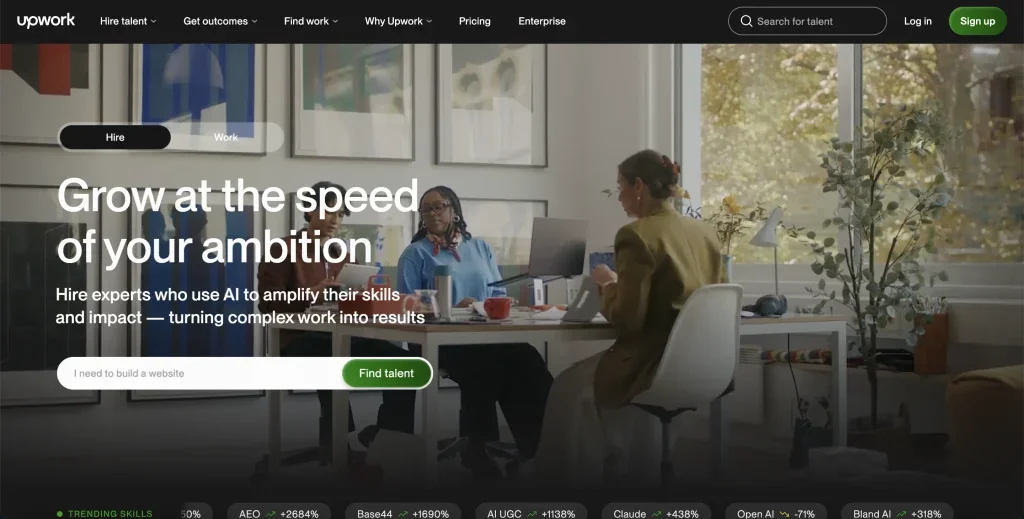
Best for: Beginners and intermediate freelancers building long-term client relationships
Upwork is still one of the biggest freelance marketplaces in the world.
Despite the growing competition, many freelancers continue using it because of the huge number of available projects across:
- writing
- graphic design
- video editing
- development
- marketing
- virtual assistance
- customer support
One of the biggest advantages of Upwork is flexibility.
Beginners can still find smaller projects to build reviews, while experienced freelancers can eventually move into higher-paying long-term contracts.
However, the platform has changed a lot in recent years.
Competition is much higher now, especially in oversaturated categories like general content writing, data entry and simple graphic design.
That means freelancers who specialize usually perform much better.
For example: NO: “blog writer” YES: “SEO writer for ecommerce brands”
Specialisation helps profiles stand out much faster.
Upwork Fees and Earnings
Upwork now charges most freelancers a standard 10% service fee on earnings.
For example:
- if you earn $100 from a project, Upwork keeps around $10
- the remaining amount goes to your account
Clients also pay separate platform fees.
Now, let’s see an example of how much a beginner freelancer can charge:
- $10–$25/hour for general virtual assistant work
- $15–$40/hour for beginner content writing
- $20–$50/hour for graphic design
- $25–$80/hour for video editing
- $40+/hour for development and specialized technical work
Real earnings vary heavily depending on skill and experience.
Some beginner freelancers may only earn a small side income at first, while experienced developers, marketers, or designers can earn thousands monthly through long-term contracts.
How Upwork Actually Works
Freelancers create profiles showcasing:
- skills
- portfolio work
- rates
- experience
Clients then post jobs, and freelancers submit proposals explaining why they fit the project.
One important thing many beginners do not realise is that proposal quality matters much more now than simply applying quickly. Generic copy-paste proposals usually get ignored because clients receive huge numbers of applications daily.
Freelancers also use “Connects” to apply for jobs. Upwork gives a limited number for free, but additional Connects usually need to be purchased.
What Makes Upwork Good?
The biggest strength of Upwork is long-term client potential.
Many freelancers start with small projects and eventually build ongoing monthly relationships with clients. Some businesses even hire freelancers full-time through repeated contracts.
The platform also offers:
- payment protection
- built-in contracts
- milestone payments
- time tracking for hourly work
This helps beginners feel safer compared to direct client payments outside platforms.
2. Toptal
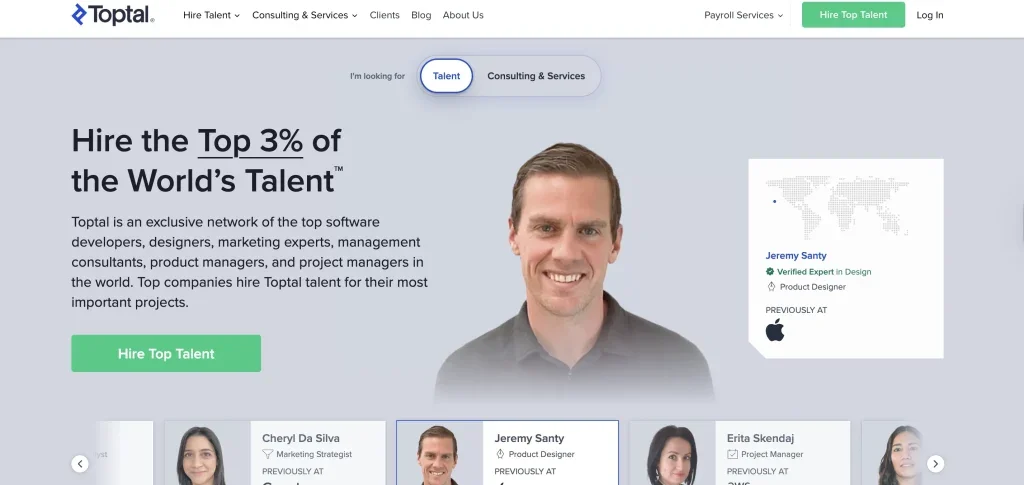
Best for: Experienced freelancers looking for premium long-term clients
Unlike open freelance marketplaces where almost anyone can create an account and start applying for jobs immediately, Toptal focuses much more on experienced professionals with strong portfolios and real project history.
The platform is especially popular among developers, designers, finance consultants, and product specialists working with startups, SaaS companies, and larger international businesses.
Because of that, projects on Toptal are usually more serious, longer-term, and much higher-paying compared to beginner freelance websites.
However, it is also much harder to enter.
Toptal screens freelancers before allowing them onto the platform, and the application process often includes technical interviews, communication tests, and practical evaluations.
Beginners with little experience usually struggle here because clients on Toptal expect freelancers to work independently with minimal guidance.
Toptal Fees and Earnings
Unlike platforms such as Upwork, Toptal does not publicly show a simple percentage fee structure for freelancers.
Instead, rates are negotiated through the platform while Toptal handles client pricing internally.
The earning potential is one of the biggest reasons experienced freelancers aim for Toptal.
For example, junior developers on the platform may charge around $35–$50 per hour, while experienced React or Python developers often work between $70–$120 hourly, depending on specialisation and experience.
Senior UX designers commonly charge around $60–$90 per hour, while AI consultants and cloud specialists can charge significantly more for niche technical projects.
To make those numbers easier to understand, a developer charging $80 per hour and working around 20 billable hours weekly could realistically earn around $6,400 monthly before taxes.
That’s why Toptal works much better for experienced freelancers than complete beginners.
How Toptal Actually Works
The first step is applying to Toptal’s screening process.
Freelancers who pass enter a private talent network where the platform matches them with projects based on specialisation, availability, and experience.
This creates a very different experience compared to traditional freelance marketplaces.
Instead of constantly sending proposals and competing against hundreds of low-cost freelancers, Toptal freelancers are usually approached for projects that already fit their skills.
Many contracts are also longer-term, which creates much more stable remote income compared to constantly chasing small one-time gigs.
Because of this system, freelancers spend far less time bidding and much more time actually working with clients.
What Makes Toptal Good?
The biggest advantage of Toptal is client quality.
Many freelancers eventually leave traditional marketplaces because they become exhausted from:
- proposal competition
- low-budget projects
- and unstable short-term gigs
Toptal feels much more curated and professional in comparison.
Clients on the platform are often willing to pay more because they want specialists instead of general freelancers.
That makes the platform especially attractive for developers, designers, and consultants who already have strong technical skills and want higher-paying remote work without constantly fighting for visibility.
3. Contra
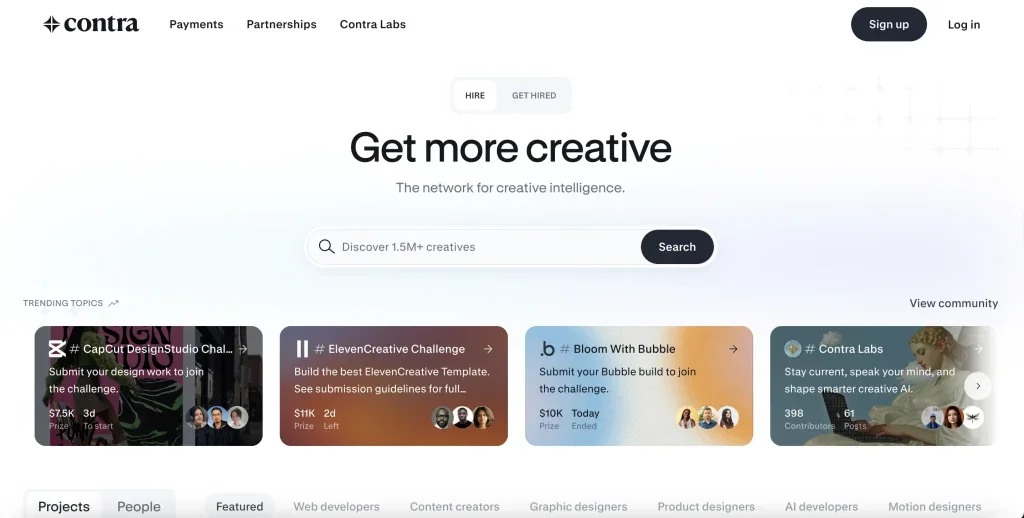
Best for: Creative freelancers and commission-free remote work
Contra became much more popular recently because it feels very different from older freelance marketplaces.
Instead of focusing heavily on bidding wars and endless proposals, Contra works more like a combination of a freelance platform, portfolio website, and professional network.
The platform is especially attractive for writers, designers, marketers, video editors, and other creative freelancers who want to showcase their work visually instead of competing only through applications.
One reason many freelancers moved toward Contra is its creator-focused approach and commission-free payments on many projects, which immediately makes the platform attractive compared to marketplaces that take noticeable percentages from every contract.
Contra Fees and Earnings
Contra promotes commission-free payments for freelancers on many projects, which means freelancers can often keep more of what they earn compared to platforms with higher marketplace fees.
The earnings vary heavily depending on visibility, specialization, and portfolio quality.
For example, beginner freelance writers or social media freelancers on Contra often charge around $20–$40 per hour while building experience.
More experienced video editors, brand designers, and content strategists commonly charge between $50–$100 hourly for ongoing client work.
A freelance video editor charging $50 per hour and working with two regular YouTube clients for around 10 hours weekly each could realistically earn around $4,000 monthly before taxes.
Unlike traditional freelance marketplaces, Contra rewards presentation and personal branding much more heavily.
Freelancers with strong portfolios and active online presence usually perform far better than people simply create an account and wait for clients to appear.
How Contra Actually Works
Instead of relying mainly on proposal bidding, Contra allows freelancers to create public portfolio pages where they can showcase projects, services, testimonials, and work experience.
Clients can discover freelancers directly through:
- portfolio visibility
- networking
- referrals
- and creator communities
This creates a much more modern freelance experience compared to older marketplaces focused entirely on job applications.
A lot of freelancers today also use Contra alongside LinkedIn or personal websites to strengthen their professional online presence and attract clients more organically.
What Makes Contra Good?
One of Contra’s biggest strengths is that it fits how modern freelancing actually works today.
Many freelancers no longer rely only on freelance marketplaces for work.
Instead, they grow through:
- networking
- audience building
- social proof
- referrals
- and personal branding
Contra supports that style much better than traditional bidding-heavy platforms.
The platform also feels much cleaner and less saturated than older freelance websites, especially for creative freelancers trying to build long-term visibility online instead of endlessly competing for low-budget projects.