Remitly Review (2026): Fees, Safety and Mobile Wallets Explained

Is Remitly safe and worth using in 2026? Learn how Remitly works with mobile wallets, what fees to expect, and how to receive money without PayPal or a bank account.
Sending money is easy, receiving it is where most people struggle.
If you don’t have PayPal or a bank account, getting paid online can feel almost impossible. That’s why many people turn to services like Remitly, especially when mobile wallets are the only option available.
But here’s the real question:
Does Remitly actually work for your situation — or are there risks you should know about?
In today’s Remitly review, we break everything down in simple terms: how Remitly works, how you can receive money through mobile wallets, what fees to expect, and whether it’s actually safe to use.
Key Takeaways
- Remitly is mainly a money transfer service, not an earning platform.
- It supports mobile wallet payouts in many countries (like M-Pesa, GCash, etc.)
- Fees and exchange rates can vary depending on the country and method.
- It is generally safe, but users still worry about scams and failed transfers.
- Best used for receiving money from others, not for making money online.
- Works well as a backup option if you don’t have PayPal or a bank account.
What is Remitly and How Does it Work?

Remitly is a US money transfer service that helps people send and receive money internationally.
It’s mostly used by people working abroad who want to send money back home to family or friends.
Instead of going through a bank, everything happens online through the app or website.
Here’s how Remitly works:
Sender → Remitly → You (receiver)
- The sender creates a transfer (via app or website)
- They choose your country and how you’ll receive the money
- They pay using a card or a bank
- You receive the money through your selected method
How can you receive money using Remitly?
Remitly gives a few options depending on your country:
- Bank account
- Cash pickup (like Western Union-style locations)
- Mobile wallet transfers
In some places, the money goes directly to a bank account. If you don’t use a bank, you can choose cash pickup, where you go to a nearby location (like an agent or partner store) and collect the money in person.
But for many people, the easiest option is mobile wallet transfers. This means the money is sent straight to your phone, into apps like M-Pesa, GCash, or similar services.
This is why Remitly is often used for ++receiving money without a PayPal or a bank account.++
Why Do People Use Remitly?
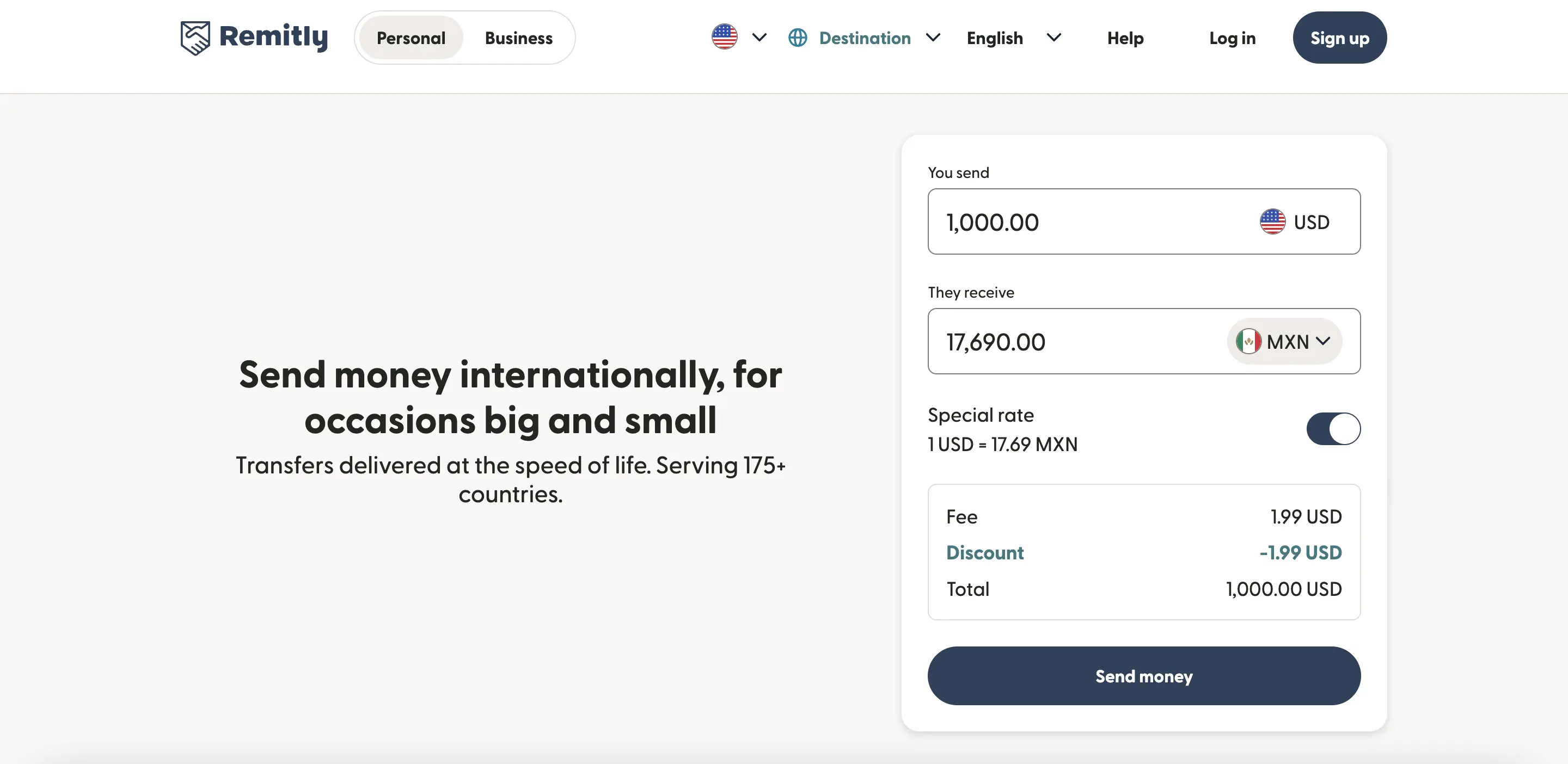
People use Remitly because it solves one simple problem: sending money across countries quickly and without complications.
Instead of dealing with banks, long waiting times, or complicated forms, everything can be done in a few steps from a phone.
Another big reason is flexibility. Remitly works in over 170 countries and supports more than 100 currencies, and it allows the sender to choose how the money will be received.
For people who rely on mobile wallets instead of traditional banks, this makes a big difference.
What is Remitly Mobile Wallet?
A Remitly mobile wallet transfer means that someone sends you money through Remitly, and the money goes directly into your mobile money account on your phone.
Remitly also offers its own digital wallet inside the app, where users can store and manage money.
This wallet allows you to:
- Keep money inside your Remitly account
- Send transfers directly from your balance
- Manage payments without always using a bank or card
There are no minimum balance requirements or monthly fees, which makes it easy to use without extra costs.
The wallet is designed to make transfers faster and more convenient, especially if you send money regularly.
This is different from receiving money into a mobile wallet like M-Pesa or GCash.
- The Remitly wallet = used by the sender inside the app
- A mobile wallet = where the receiver gets the money
If you are confused how this works, check our beginner guide, where we explain ++how mobile money transfers actually work.++
How Do People Receive Money with Remitly?
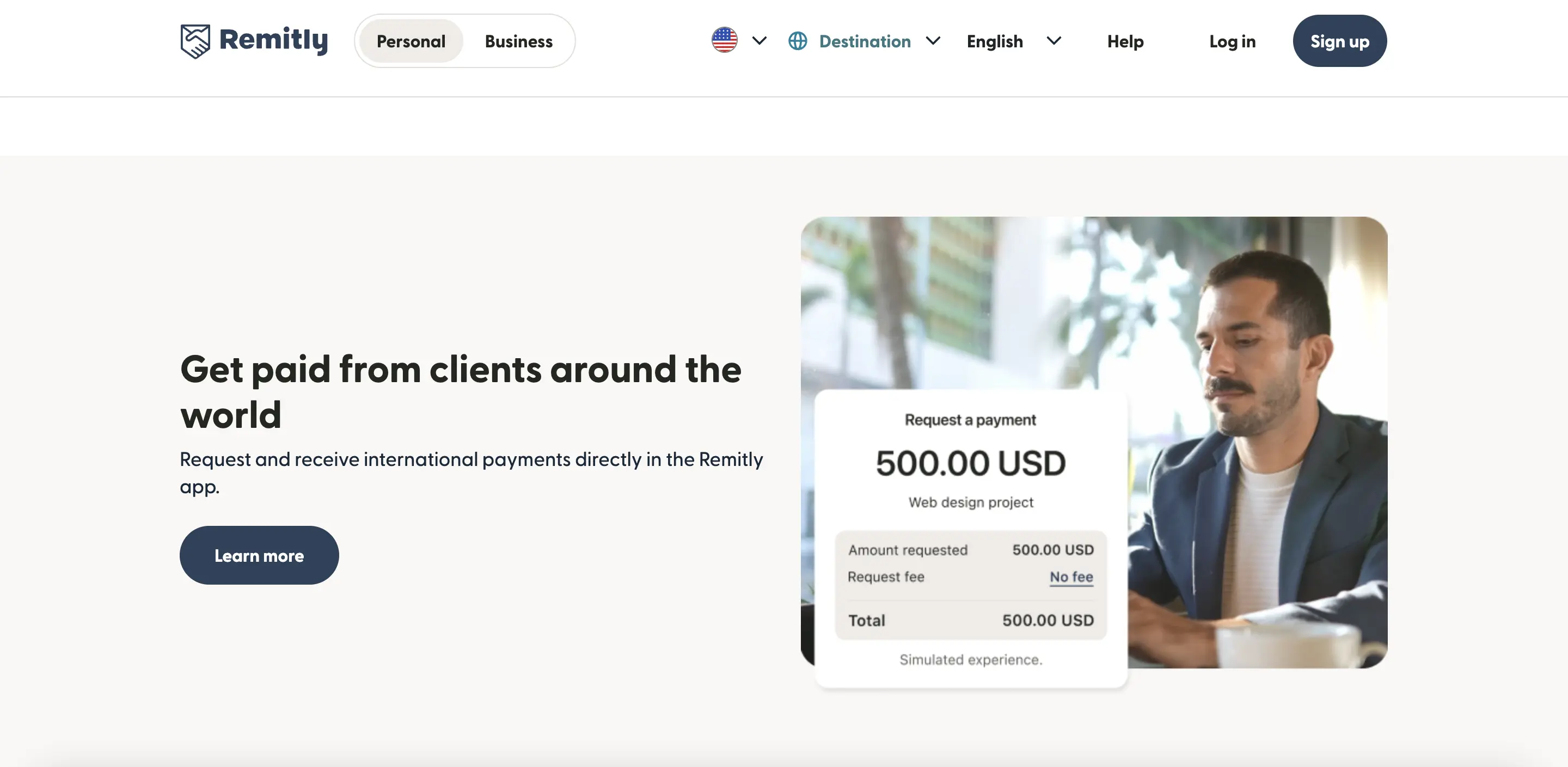
Most people don’t use Remitly for business or “making money online”.
They use it for one simple reason: to receive money from someone they already know.
Here are the most common real-life situations based on user reviews and platform data.
1. Family sending money home (most common use case)
This is by far the biggest reason people use Remitly.
Someone working abroad (for example, in the US, UK, or Europe) sends money to family members in countries like Pakistan, the Philippines, Kenya, and Nigeria.
According to platforms like ++Trustpilot++ and Remitly’s own data, many users mention sending money weekly or monthly for daily expenses, rent or/and groceries.
This is the core use case Remitly is built for.
2. Receiving money directly to a mobile wallet
In countries where banking is limited, users often receive money through mobile wallets instead of bank accounts.
For example:
- A user in Kenya receives money via M-Pesa
- A user in the Philippines receives money via GCash
Reviews on sites like Trustpilot often highlight fast delivery (“money arrived in minutes”) and convenience (“no need to go to a bank”).
This is one of the main reasons Remitly is popular in developing regions.
3. Cash pickup for people without accounts
Some users don’t have a bank account or a mobile wallet.
In this case, they use cash pickup.
Here’s how it works in real life:
- The sender sends money through Remitly
- The receiver goes to a local partner location
- Shows ID and collects the cash
According to Remitly and third-party reviews (like ++Wise comparisons++), this is still widely used, especially in rural areas.
4. Freelancers receiving payments (less common, but possible)
Some freelancers use Remitly to receive payments from clients abroad.
However, this is not very common because:
- Remitly is designed for personal transfers, not business payments
- Some clients prefer PayPal or bank transfers
Based on discussions and comparisons from sites like Wise, this method works — but it’s not the main use case.
5. Emergency transfers (fast support)
Another real situation mentioned in reviews:
Someone needs money urgently, for example, medical expenses, unexpected bills, and travel issues.
The sender uses Remitly’s express transfer, and the receiver gets the money quickly.
Many Trustpilot reviews highlight speed as one of the biggest advantages.
What are Remitly Fees?
Remitly makes money in two main ways:
1. Transfer fee
This is the fee you see before sending money.
- It can be low or even discounted for first-time users
- It depends on the country and payment method
2. Exchange rate markup
This is where many people don’t pay attention.
Remitly sets its own exchange rate, which is usually slightly lower than the real market rate.
This means you lose a small amount of money during conversion — even if the transfer fee looks low.
Is Remitly Safe to Use?
Yes, Remitly is safe to use, representing a legitimate service for international money transfers.
Remitly is a regulated financial service, which means it follows official rules to protect your money.
It uses strong security features like:
- advanced encryption (to protect your data)
- two-step login (to keep your account safe)
- identity checks to prevent fraud
Millions of people use it to send money every day, and the platform actively monitors transfers to detect suspicious activity.
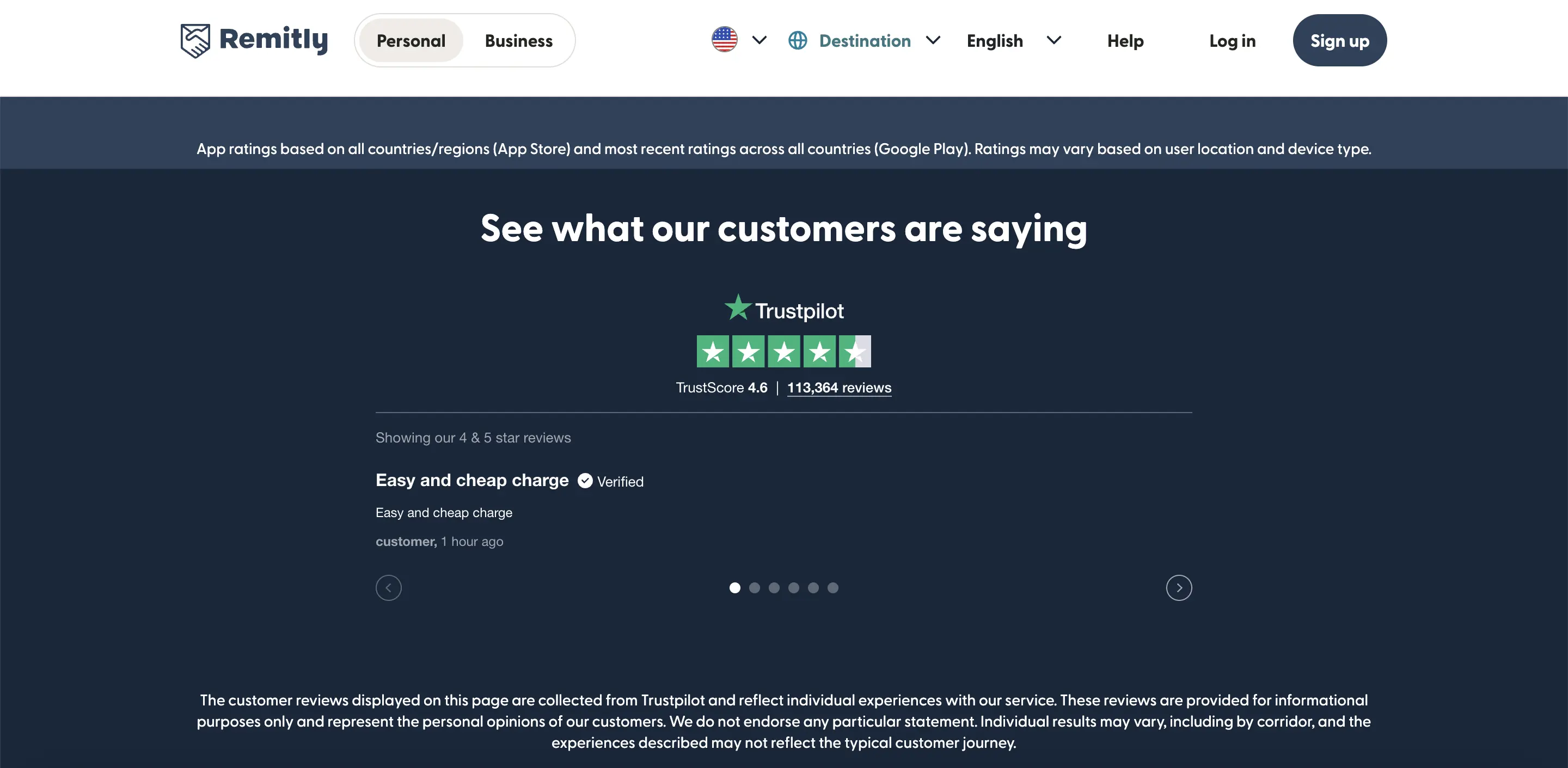
Remitly has a rating of around ++4.6 out of 5 on Trustpilot++, based on over 100,000 reviews.
Many users highlight fast transfers (“money arrived within minutes”), ease of use (“simple and clear process”), and reliable delivery for regular transfers
This shows that for most people, Remitly works as expected.
But we took a closer look at reviews (including Trustpilot) and noticed some complaints, including delayed transfers, accounts temporarily restricted for verification, and exchange rates not being as good as expected.
Still, it’s important to be careful!
Always double-check who you are sending money to, because no platform can protect you if you send money to the wrong person.
What if I Get Scammed on Remitly?
Remitly is a safe and legitimate website, but like any money transfer service, it can be used by scammers.
Remitly cannot protect you from:
- Sending money from/to the wrong person;
- Falling for scams outside the platform.
If you send money to the wrong person, here’s what can happen:
- If the transfer is still pending, you may be able to cancel it
- If the money has already been delivered → it is very difficult to get it back
This is not just a Remitly issue — it’s the same with bank transfers, Western Union and most money transfer services.
Once the money is received, it’s gone.
What can Remitly do for you in this situation?
Remitly can monitor suspicious activity, block or review unusual transfers, and help cancel transfers that haven’t been completed
But Remitly cannot guarantee refunds if you willingly sent the money and the transfer is already completed.
So what you can do to prevent getting scammed is:
- Only send money to people you know and trust
- Double-check names and details before confirming
- Avoid sending money under pressure or urgency
- Be careful with online deals or strangers
Pros and Cons of using Remitly
Pros
Remitly is very easy to use, even if you’ve never sent or received money online before. The whole process is simple and can be done in just a few steps from your phone.
It also offers multiple delivery options, which gives flexibility depending on what’s available in your country. This makes it practical for different situations, whether you prefer digital transfers or physical cash.
Another advantage is speed. In many cases, transfers can arrive quickly, which is useful when money is needed urgently.
Cons
One downside is that the total cost can vary, especially depending on how and where the money is sent. This makes it harder to always predict the exact value you’ll receive.
There can also be occasional delays, particularly when additional verification is required. This doesn’t happen all the time, but it’s something users report.
Final Verdict: Is Remitly worth it?
Remitly does exactly what it’s supposed to do, send and receive money between countries in a simple and reliable way.
If you need an easy way to receive money from someone abroad, especially with flexible delivery options, Remitly is a good choice.
The process is easy to understand, and for most users, it works without major issues.
At the same time, it’s important to go in with the right expectations. Costs can vary depending on the transfer, and like with any money service, you need to be careful when sending or receiving funds.